
Beginner buying help
Seller Claim Checklist
Use this checklist to separate what a listing shows from what the seller asserts. A clear listing should name the material, disclose relevant treatments or imitations, and provide photographs that let you inspect the actual item or a clearly identified example.
Check the listing
Record the claim before judging the stone
- 01
Write down the exact material name
Note whether the seller names a mineral, a trade name, or only a color. Descriptive wording such as “blue crystal” is not a material identification.
- 02
Look for treatment and material disclosure
Check for terms such as dyed, heated, coated, stabilized, reconstructed, synthetic, glass, or resin. If the wording is absent or vague, ask directly.
- 03
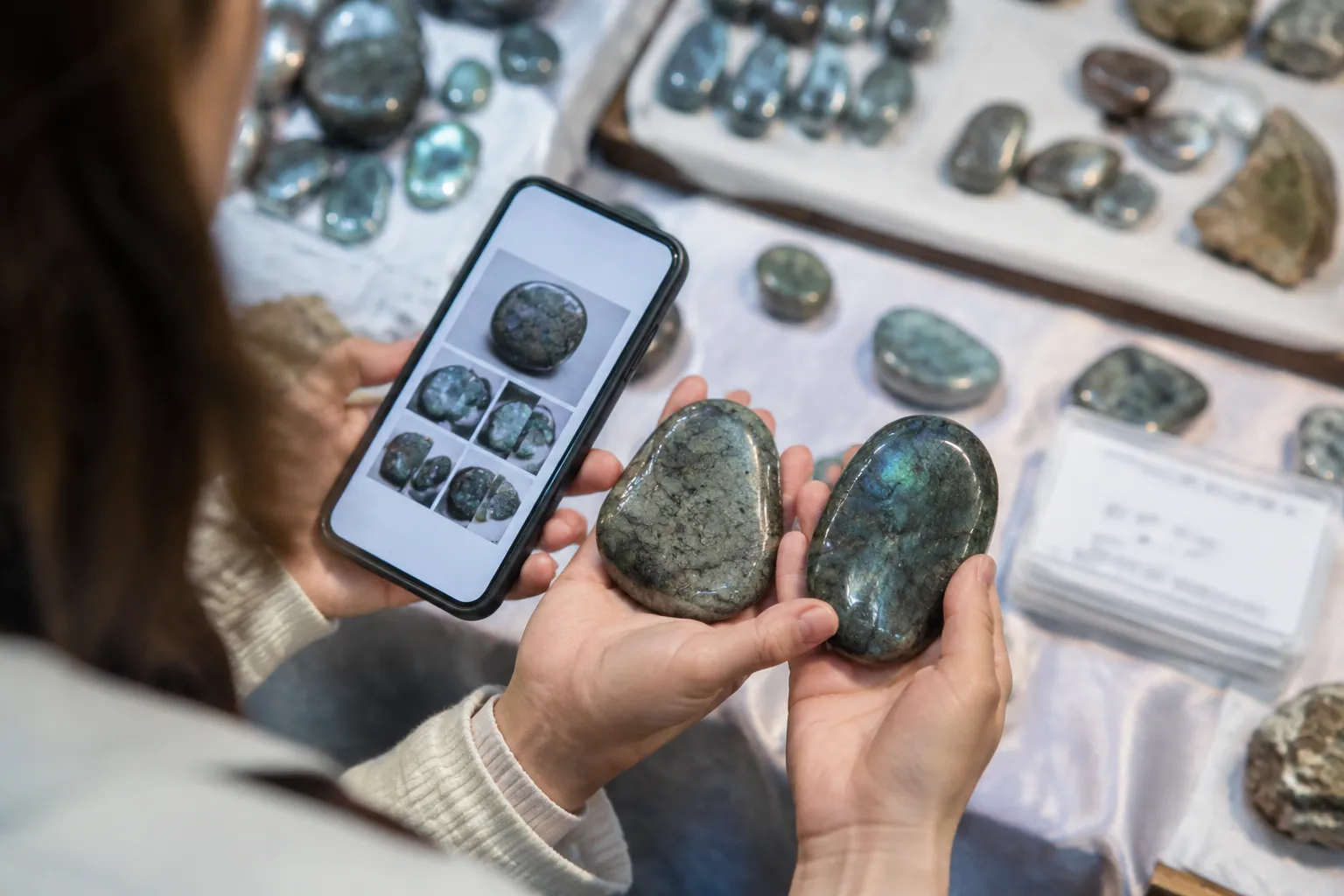
Confirm what the photographs represent
Determine whether the images show the exact item, one sample from a batch, or a general example. Request neutral-light views of multiple sides when the distinction affects your decision.
- 04
Compare the description with visible features
Check color distribution, clarity, luster, texture, inclusions, chips, polish, and fracture patterns. Treat mismatches as questions, not automatic proof of deception.
- 05
Ask what supports origin or authenticity claims
A confident label, rarity statement, or claimed location is still a seller claim unless supporting evidence is supplied. Decide whether that evidence matters enough to delay the purchase.
Testing threshold
Know where observation stops
Photographs and basic observation can reveal inconsistencies, but they may not separate natural from synthetic material or detect every dye, coating, filling, or other treatment. Color can also shift with lighting, editing, and screen settings. When identity or treatment status materially affects the purchase, request appropriate documentation or seek independent gemological testing.
The site's broader boundaries are explained in Identification and Wellness Boundaries. Questions about how claims and corrections are handled are covered in the Editorial Policy.
Use the result
Choose a proportionate next step
Proceed when the description is specific enough for your needs. Ask for clarification when a relevant disclosure is missing. Pause when the price or decision depends on a claim that the available evidence cannot support.
Browse crystal comparison guidesReport a page issue
Send the exact wording and page
Corrections are easier to review when the message identifies the claim, the relevant page, and the evidence or source that may require a change.
Contact the editorial desk