Beginner buying help
Crystal Comparison Guides
Use these guides when two stones look similar, a listing makes a confident material claim, or you need to decide which details to ask about before buying. Each comparison separates visible features from seller statements and unresolved identification questions.
How to use a comparison
Start with the difference that affects the purchase
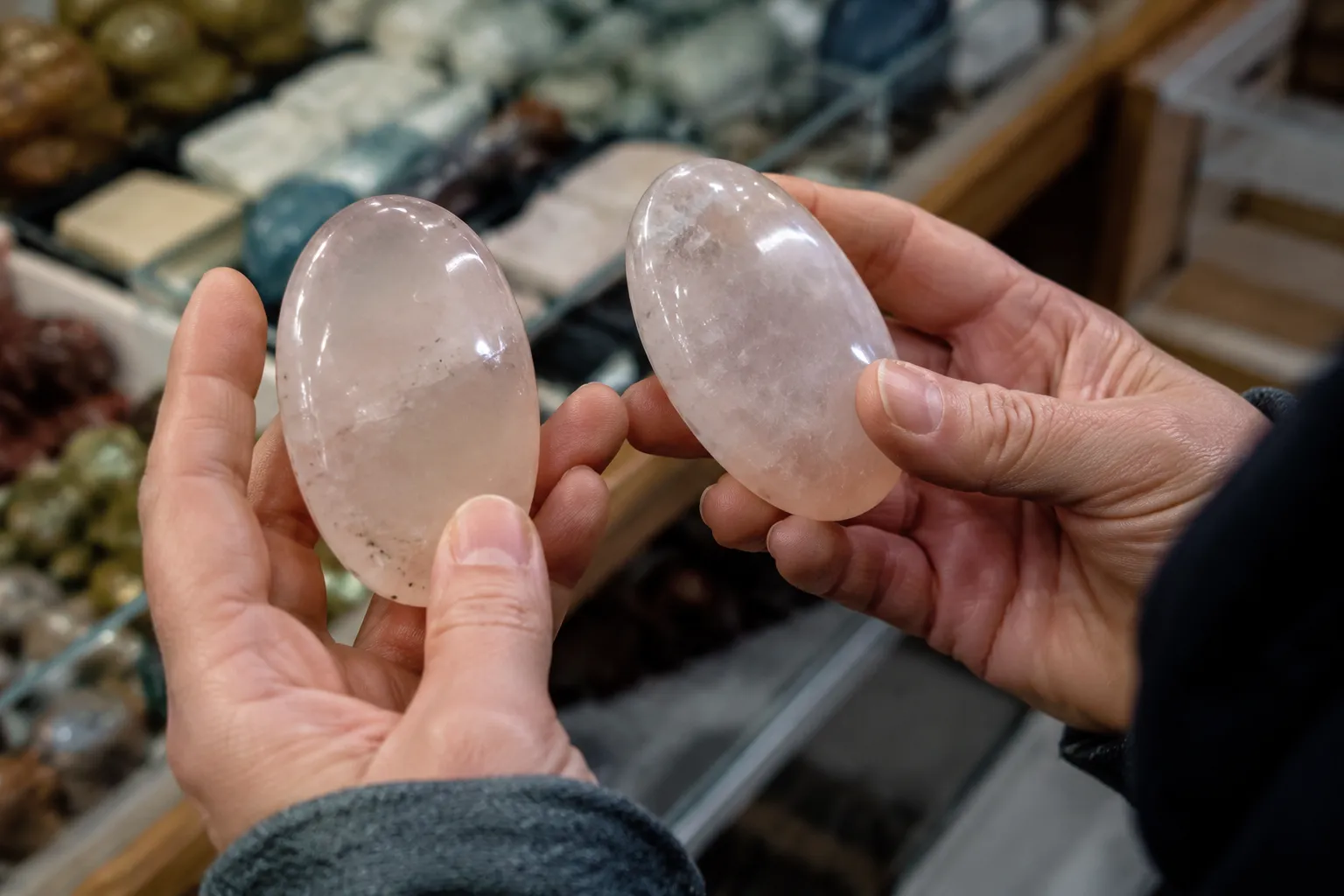
- 1. Record what is visible. Note color distribution, transparency, luster, texture, inclusions, chips, and fracture surfaces without assigning a name yet.
- 2. Check the listing language. Separate the material name from claims about origin, treatment, rarity, or natural formation.
- 3. Keep alternatives open. Ask which natural, treated, synthetic, reconstructed, glass, or resin materials could share the same visible clues.
Comparison method
Observation first, interpretation second
The guides compare labeled examples, seller photographs, product descriptions, and material properties documented in gemological or geological references. Examples show possible variation; one photographed specimen is not treated as a universal identification rule.
When a claim depends on composition, treatment, or origin, the useful next step is a disclosure question or appropriate gemological testing, not a stronger guess from color.
Review the seller claim checklistTesting threshold
Know where visual comparison stops
Photographs may shift color, hide surface texture, and remove useful scale. Home observation can screen possibilities, but it cannot reliably confirm every treatment, synthetic material, imitation, geographic origin, or stone identity. Refractive, microscopic, spectroscopic, or other professional testing may be needed when confirmation affects the purchase.
For details on how examples, claims, corrections, and uncertainty are handled, read the Editorial Policy or review the Identification and Wellness Boundaries.